
Worm Juice Fertiliser: What It Is, How to Use It Safely, and Whether It Works
What Is Worm Juice Fertiliser?
Quick Answer: Worm juice is the liquid that drains from a worm farm complete with Composting Worms Townsville – as food scraps and bedding break down. It is a soluble, low-concentration fertiliser that supplies some nutrients and microbial activity. It is not a complete fertiliser, so it works best as a supplement to healthy soil.
Worm juice, also called leachate, forms when moisture and organic matter pass through a worm bin or worm farm and drain out the base. Its composition depends on what has been fed to the worms, how wet the system is, How Much Worm Castings To Use and how well it is aerated.
Soil and composting guidance from the NSW Department of Primary Industries and CSIRO generally treats nutrient-rich liquids as supplements rather than replacements for balanced soil nutrition.
Key characteristics:
- Form: Liquid, soluble, and quick to act on plant roots
- Nutrient profile: Variable and typically low in concentration
- Primary benefit: Microbial activity and gradual nutrient availability
- Limitation: Not a substitute for a soil test or a balanced fertiliser program
Is Worm Juice Safe to Use on Vegetables?
Quick Answer: Worm juice can be used on edible crops and Vermicast Fruit Trees North Queensland when it comes from a well-aerated system fed mainly plant-based scraps. Leachate from anaerobic or wet systems can carry pathogens and cause root damage. Dilute it, avoid applying it to harvestable parts, and keep it off crops close to harvest.
Food safety is the main risk factor. Biosecurity and food safety guidance from the Department of Agriculture, Fisheries and Forestry and Food Standards Australia New Zealand emphasises managing contamination risk on food crops, and that principle applies directly to worm-derived liquids.
Risk factors:
- Anaerobic leachate: Foul-smelling, acidic, and harmful to roots
- Animal-based scraps: Increase pathogen risk; most worm farmers avoid meat and dairy
- Application timing: Applying close to harvest increases contamination exposure
- Untested systems: Unknown feedstock makes the product’s safety unverifiable
How Do You Use Worm Juice Without Burning Plants?
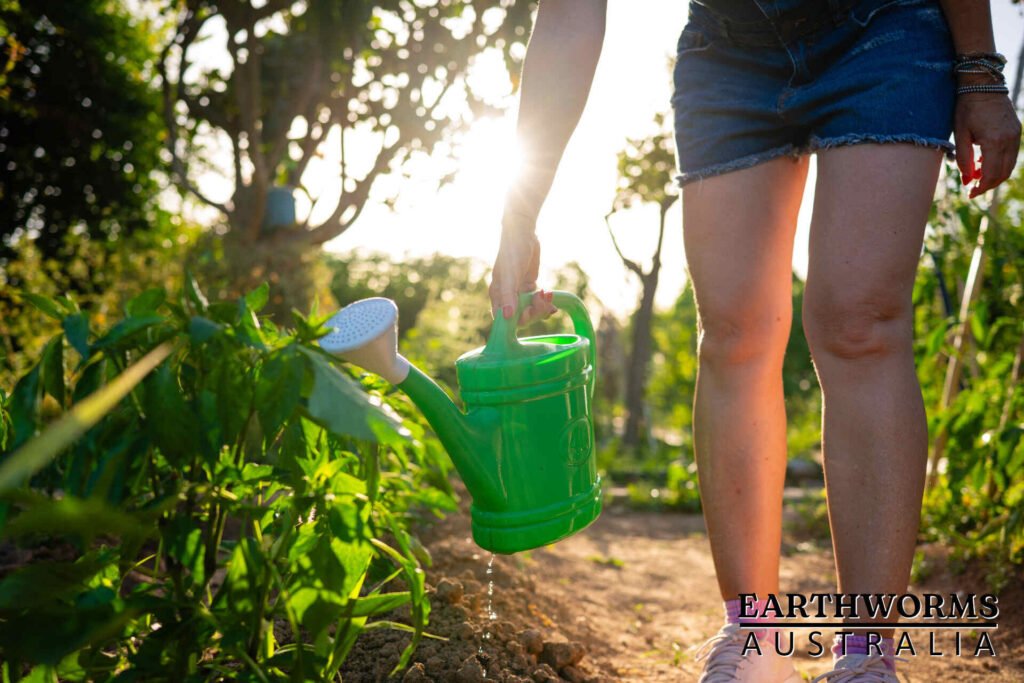
Quick Answer: Dilute worm juice until it resembles weak tea, then apply it to the soil around the root zone rather than the foliage. Start with a small test on a few plants and observe for 7 to 10 days. Discard any leachate that smells rotten, as it indicates anaerobic conditions.
Application steps:
- Collect leachate regularly so it does not stagnate in the collection tray
- Check the smell: a sweet, earthy odour akin to Bulk Vermicast Townsville is acceptable, while a rotten or sulphurous smell is not
- Dilute with rainwater or dechlorinated water until the colour is light
- Test on a small batch of plants first
- Apply to soil around the drip line, not directly onto leaves or fruit
- Reduce frequency if you see leaf yellowing or tip burn, which can indicate excess salts
Confirm dilution ratios against your local agricultural extension service before standardising a routine, as optimal rates vary by soil type, crop, and feedstock.
Worm Juice vs Worm Tea: Which Is Better?
Quick Answer: Worm juice is the unprocessed liquid that drains from a worm bin. Worm tea is a brewed extract, usually made by steeping Worm Castings Townsville in water, often with aeration. Worm tea is generally more consistent and safer to standardise, while worm juice is free but more variable.
| Feature | Worm Juice (Leachate) | Worm Tea (Brewed Extract) |
|---|---|---|
| Source | Drains from the worm bin | Steeped from castings |
| Consistency | Variable | More consistent |
| Cost | Free as a by-product | Requires water, castings, and aeration |
| Pathogen risk | Higher if feedstock is unmanaged | Lower when brewed aerobically |
| Odour risk | Higher if anaerobic | Lower when aerated |
Both products are regulated as fertilisers in some jurisdictions. Any product sold with specific nutrient or performance claims must comply with the Australian Competition and Consumer Commission rules on misleading representations under the Australian Consumer Law.
Is Worm Juice Worth Using in Townsville’s Climate?
Quick Answer: In Townsville’s hot, humid climate, Worm Farm Summer Queensland can become anaerobic faster, making leachate management more important. Good drainage, shade, and frequent collection reduce odour and root-damage risk. Research on tropical soils from James Cook University is a useful local reference for application decisions.
Local considerations:
- Heat: Accelerates microbial activity and can drive systems toward anaerobic conditions
- Rainfall: Wet-season moisture increases leachate volume and dilution needs
- Soil type: Many tropical soils are low in organic matter, so supplementing with organic inputs is beneficial
- Shade: Keeps worm bins cooler and reduces moisture loss
Practical Takeaways
- Use only aerobic leachate. If it smells rotten, do not apply it.
- Dilute before use, and test on a few plants before scaling up.
- Apply to soil, not foliage, and avoid edible parts close to harvest.
- Pair it with a soil test so you know what your soil is actually missing.
- Treat it as a supplement. Maintain organic matter, such as compost and mulch, as the foundation.
Where to Go from Here
If you want a consistent, measurable input rather than managing a worm bin yourself, brewed worm products offer more predictable results. Browse the range at earthworms.au, and check the product’s stated application rates against the dilution principles above before you start.

Frequently Asked Questions
Does worm juice smell bad?
Healthy worm juice has a mild, earthy smell. A rotten, sulphurous, or sour smell means the system is anaerobic, and the liquid should be discarded rather than applied to plants. Add Lime to balance the pH and if there is no improvement – discard.
Can I use worm juice on indoor plants?
Yes, when diluted and applied to the soil. Indoor plants are more sensitive to salt build-up, so flush the pot periodically with plain water.
How often should I apply worm juice?
There is no universal schedule. Start Worm Farm Townsville with infrequent applications, typically every few weeks during active growth, and adjust based on plant response and a soil test.
Is worm juice the same as compost tea?
No. Compost tea is brewed from finished compost and often aerated. Worm Juice Fertiliser Townsville is drainage from a worm system and varies more in composition.