
How Much Worm Castings to Use: Rates for Pots, Garden Beds and Lawns
How much worm castings should you use?
Quick Answer: For most Australian home gardens using organic worm castings, a practical starting point is a 10–25% mix of Worm Castings Townsville by volume in worm casting potting soil , or a 2–3 cm layer worked into the top 10 cm of organic garden soil before planting. Application Rates of wiggle worm castings depend on the plant, the stage of growth, and the earthworm casting soil. Bulk Earthworm Casting Soil quality also changes the result, so start low and observe. With red tiger worm earthworm castings – the best approach is to go slow and patient to begin with until you have established a viable colony.
Worm castings are a soil amendment produced by Composting Worms Townsville, not a bulk synthetic fertiliser. When you Start Worm Farm Townsville, the effect comes from improved organic soil structure, deeper layers of microbial activity, and a slowed nutrient release, so the right amount is usually modest and applied repeatedly rather than all at once. This means worm castings for garden are effective and powerful over the longer term.
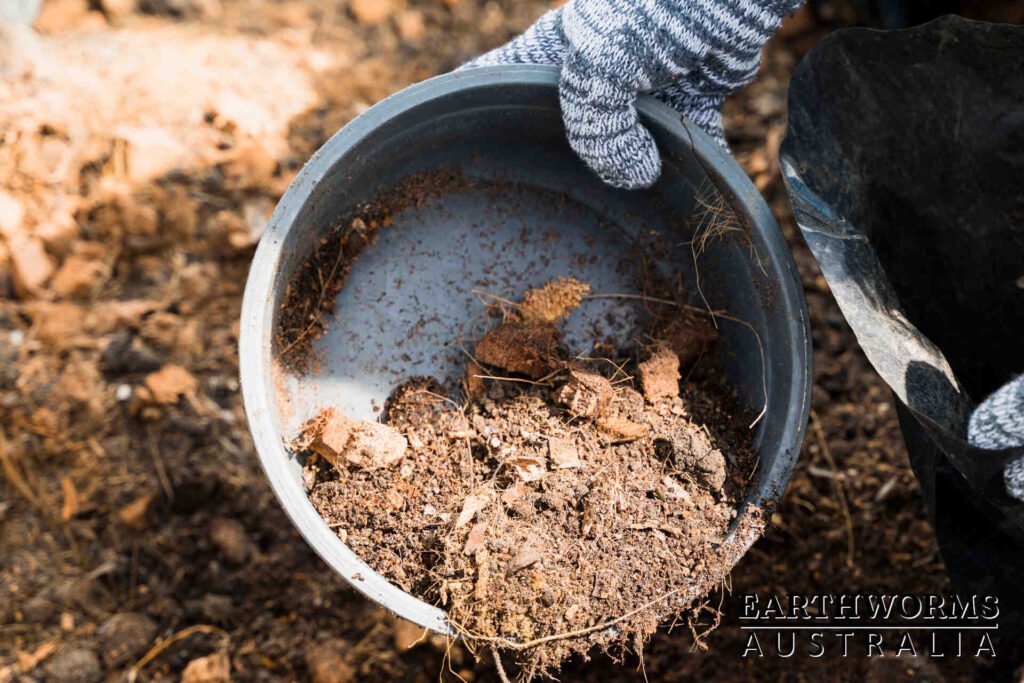
How much worm castings for potted plants?
Quick Answer: Mix worm casting soil into potting worm soil builder at roughly one part worm castings for indoor plants to three or four parts mix for seedlings and vegetables. For established ornamentals, use a lighter blend of worm tea or worm castings for vegetable garden top dress. Avoid pure red tiger worm castings in containers, since worm castings for vegetables hold water differently to traditional worm castings for plants and can compact, leading to anaerobic sub-optimal conditions.
| Use case | Castings : mix (by volume) | Method |
|---|---|---|
| Seed raising | 1 : 4 (about 20%) | Mix thoroughly; keep moist |
| Transplanting into pots | 1 : 3 (about 25%) | Blend into the root zone |
| Established potted plants | 1 : 6 to 1 : 10 | Work into top 2–3 cm or top dress |
| Ornamental/indoor plants | Top dress only, thin layer | Refresh a few times a year |
Practical note: Pots with no drainage need a lighter ratio because worm castings retain moisture.
How much worm castings for garden beds and lawns?
Quick Answer: For new or renovated garden beds, spread 2–3 cm of castings (about 20–30 litres per square metre) and work it into the top 10 cm before planting. For established beds, side dress around plants every 6–8 weeks during the growing season. For lawns, apply a thin top dressing and rake it in rather than a deep layer.
Volume check (calculated): A 2 cm layer over 1 m² equals 0.02 m³, or 20 litres. A 3 cm layer equals 30 litres.
| Application | Rate guide | Timing |
|---|---|---|
| New garden bed | 2–3 cm layer, worked into top 10 cm | Before planting |
| Established bed (side dress) | About 250 mL per plant | Every 6–8 weeks in season |
| Vegetable transplant | About 1 cup (250 mL) in planting hole, mixed with soil | At planting |
| Lawn top dressing | Thin layer, raked in | Early spring or autumn |
Can you use too many worm castings?
Quick Answer: Yes. Heavy, repeated applications can dilute the soil’s structure, raise salts, and reduce the benefit to plants, particularly in seed-raising mixes. Seedlings and young plants are most sensitive, so keep castings to a smaller share of the mix at these stages.
Research into vermicompost shows that plant response is not linear. Growth may increase at moderate rates while higher rates produce smaller gains or no further benefit. Start with a moderate rate, observe the plant over two to three weeks, and adjust.
Should you dig castings in or top dress?
Quick Answer: Dig castings into the top layer when preparing beds, and top dress when the plants are already established. Incorporating worm compost castings places nutrients and microbes into the root zone. Top dressing with bio-active worm castings protects the soil surface and suits perennials and lawns.
Castings also improve soil physical properties. According to Landscape South Australia, vermicast increases humus in the soil compost profile, which helps boost water-holding capacity and can improve pH. This is especially useful in sandy or fast-draining soils, where water retention is the main limit.
How do worm castings compare with compost and synthetic fertiliser?
Quick Answer: Worm castings act more slowly than synthetic fertiliser and provide a broader range of soil benefits. Compared with general compost, earthworm castings are usually finer and more biologically active. Synthetic fertiliser gives a fast, concentrated nutrient response but does not build soil structure like Bulk Vermicast Townsville does.
Application rates for any organic amendment should be calculated from the product’s characteristics and the soil. Research from the University of Southern Queensland notes that compost rates are often generic and that stabilised products should be integrated into a whole fertiliser program, for example if you have a specific Vermicast Fruit Trees North Queensland which applies equally to castings.
Practical takeaways for Australian gardeners
- Test first: Know your soil type. Sandy soils often respond well to regular moderate applications, while heavy clay benefits from fewer, larger applications.
- Start low: Begin with a 10–20% mix for containers and a 2 cm layer for beds, then adjust.
- Keep castings moist: Dry castings are dusty and harder to incorporate, so mist lightly before use.
- Schedule applications: Apply before planting, then side dress through the growing season.
- Record results: Note plant vigour and soil condition over one season to refine your own rate.
Taking the next step
If you want castings that are consistent in quality and suited to Queensland conditions, Earthworms Australia produces castings for home gardeners and local growers. You can also purchase locally derived Worm Juice Fertiliser Townsville – Contact us to ask about application support for your specific plants and soil.

Frequently Asked Questions
Can I use worm castings on seedlings?
Yes, but mix them into the seed-raising medium at a lower share, around 20% or less. Pure castings are too rich and can burn young roots.
How often should I apply worm castings to a vegetable garden?
A common approach is a pre-planting incorporation followed by side dressing every six to eight weeks during the Worm Farm Summer Queensland growing season.
Do worm castings smell?
Good-quality, fully processed castings have a mild, earthy smell. A strong odour usually means incomplete processing or excess moisture.
Can worm castings replace fertiliser entirely?
They can supply nutrients and build soil health, but heavy feeders may still need supplementary nutrition. Monitor plant response and adjust accordingly.