
Worm Farms in Townsville: A Practical Guide to Setup, Feeding and Using Vermicast
What Is a Worm Farm and How Does It Work in Townsville?
Quick Answer: A worm farm is a contained system in which Composting Worms Townsville convert food scraps and bedding into vermicast (worm castings) and worm juice. Because it produces little heat and keeps most nutrients, it suits Townsville backyards, units and small properties. It needs shade, moisture and regular feeding.
A worm farm is a self-contained composting system. Unlike a hot compost heap, it generates little heat and retains most nutrients. Australian composting guidance for households notes that the finished Bulk Vermicast Townsville material is a stable, crumbly, nutrient-rich product, and that worm farms can be kept indoors or outdoors all year and remain largely odourless when properly maintained.
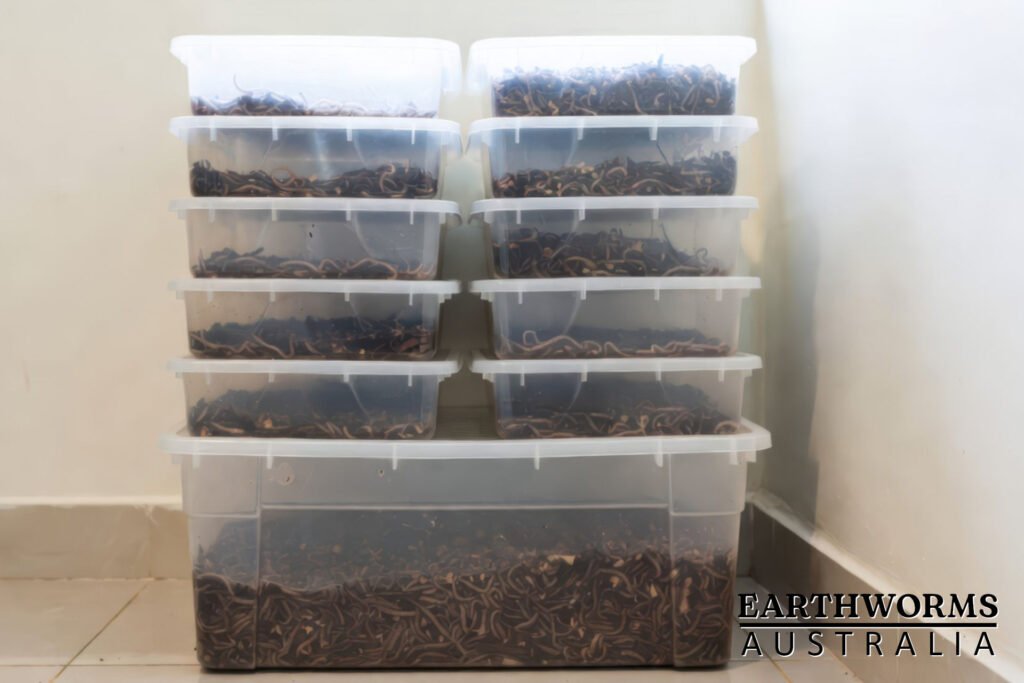
Why Townsville Households Use Worm Farms
Townsville’s council promotes home composting for a specific local reason. Its guidance states that composting improves the texture of the region’s clay and sandy soils, making them more moisture-retentive and loamy. Townsville City Council also notes that a large share of household waste is compostable, which makes the practice a practical way to reduce landfill.
Key benefits at a glance:
| Benefit | Practical effect for a Townsville household |
|---|---|
| Lower landfill volume | Diverts kitchen scraps from general waste |
| Soil conditioning | Improves water retention in sandy and clay soils |
| Low odour when managed | Suits units and small yards |
| Low heat output | Avoids the overheating common in large open heaps |
Which Worms Should I Use?
Quick Answer: Use composting species, not common garden earthworms. The two most common in Australian vermicomposting are the red wriggler or tiger worm (Eisenia fetida) and the European nightcrawler (Eisenia hortensis). Worms from a garden bed do not break down food waste efficiently and will not thrive in a bin.
Garden earthworms are a different group from composting worms. Australian farm-scale vermicomposting guidance from the South Australian government identifies the red wriggler or tiger worm and the European nightcrawler as the species most commonly used in Australian vermicompost systems. Composting worms also tolerate confinement and reproduce quickly. Waste and recycling guidance from the NSW Northern Rivers region describes them as high-appetite worms that can eat more than their own weight in food each day.
Can a Worm Farm Work in Townsville’s Climate?
Townsville’s heat and humidity are the main constraints, so placement matters more than in cooler regions. Worms are sensitive to temperature extremes, and most council guidance recommends a cool, shaded position. Inner West Council advises keeping the worm farm in a shaded spot because worms do not tolerate extreme temperatures, and Redland City Council recommends keeping the system out of extremes of weather.
Placement checklist for Townsville:
- Shaded for most of the day, away from afternoon sun
- Ventilated, with drainage holes and airflow
- Accessible for daily feeding and monthly checks
- Protected from heavy rain, which can waterlog the bed
What Can Go Into a Worm Farm, and What Must Stay Out?
Quick Answer: Feed worms small pieces of fruit, vegetable and garden waste. Avoid meat, dairy, citrus in large quantities, and oily or highly salty foods. Feeding the wrong items causes odour, pests and die-off.
Most council guidance agrees on a short list of safe feed. Redland City Council states that no meat or dairy products should be added, because worms will refuse to eat them, the food spoils and the resulting odours attract problems.
| Suitable feed | Avoid |
|---|---|
| Vegetable and fruit scraps, in small pieces | Meat and fish |
| Coffee grounds and tea leaves | Dairy products |
| Crushed eggshells (help regulate pH) | Large amounts of citrus, onion or garlic |
| Shredded newspaper and cardboard (bedding) | Oily, salty or heavily cooked food |
| Garden leaves and dried plant matter | Pet waste from carnivores |
Feeding rule: Add food in small amounts and increase only when the previous feed has been consumed. Overfeeding is the most common cause of smells.
Is a Worm Farm Worth It for a Townsville Household?
Quick Answer: A worm farm is worth it for households that produce regular fruit and vegetable scraps and have shaded space. Council guidance suggests a small farm can process the food waste of a household of four, though actual output depends on how much food is added and how well the system is managed.
Redland City Council states that a small worm farm should be able to consume the fruit and vegetable waste produced by a household of four. The practical benefit is that a worm farm diverts organic waste from landfill while producing a fertiliser for the garden, such as Vermicast Fruit Trees North Queensland
Worm Farm vs Compost Bin
Worm farms and compost bins solve different problems. A worm farm handles small, regular kitchen waste in a compact system. A compost bin handles larger volumes of garden waste. Guidance from Dunedin City Council notes that a worm farm will not handle all organic waste, so a regular compost bin is useful alongside it.
Where Can Townsville Residents Get a Worm Farm, and What Does It Cost?
Quick Answer: Townsville City Council promotes composting and worm farming, but this review did not confirm a current Townsville council worm farm subsidy or price. Check the council’s waste team for current programs. Commercial worm farms, DIY builds and worm stock are available from local suppliers and online retailers.
I could not verify a current Townsville council worm farm subsidy or its pricing. The council’s composting guidance is available on its website. Several other Australian councils run subsidised programs, which indicates the model exists, but Townsville’s current offer must be confirmed directly with the council.
Options for Townsville residents:
- Council programs: Check the Townsville City Council waste team for current composting or worm farm offers.
- Commercial worm farms: Purchase a ready-made tray system from a local or online supplier.
- DIY worm farm: Build from a plastic tub with drainage holes, a false floor and a tray to catch leachate. Redland’s guidance confirms that old containers and bins can be used.
- Worm stock: Buy composting worms separately. Do not use garden earthworms.
How Do I Set Up and Maintain a Worm Farm in Townsville?
Quick Answer: Set up the farm in a shaded, ventilated spot with a 10–15cm bedding layer of damp shredded newspaper, leaves and compost. Add the worms, cover with a damp hessian or newspaper layer, and feed small amounts regularly. Keep the bed damp, not wet, and check pH and drainage every few weeks.
Step-by-Step Setup
- Choose a container. Use a durable vessel with drainage holes and a tray or base to catch liquid. Typical worm box dimensions are around 30cm deep, 60cm wide and 90cm long, according to NSW regional waste guidance.
- Lay the bedding. Build a 10–15cm layer of moist shredded newspaper, leaves and finished compost or soil.
- Add the worms. Redland guidance recommends about 1,000 worms to start. Add them to the top of the bedding.
- Cover and shade. Cover the bed with damp hessian, newspaper or an old T-shirt and keep the farm in shade.
- Feed in small amounts. Add small pieces of food and monitor consumption.
- Maintain moisture and pH. Keep the bed damp but not wet. Add a little wood ash, dolomite or lime every few weeks, or crushed eggshell, to prevent acidity.
Routine Maintenance
- Weekly: Check moisture and feed as needed.
- Monthly: Check drainage, pH and worm activity. Drain worm juice.
- Every few months: Harvest castings from the top layer and reset bedding if needed.
What Problems Happen in Worm Farms, and How Do I Fix Them?
Quick Answer: Most worm farm problems come from overfeeding, excess moisture or acidity. Smells usually mean overfeeding or wet bedding. Flies usually mean exposed food. Worms climbing out usually mean the bed is too wet, too acidic or unsuitable.
| Problem | Likely cause | Fix |
|---|---|---|
| Smell | Overfeeding or waterlogged bed | Reduce feed, improve drainage, add dry bedding |
| Flies | Exposed food | Cover food with bedding or damp newspaper |
| Worms escaping | Too wet, too acidic or poor conditions | Adjust moisture, add lime or dolomite, check feed |
| Slow breakdown | Too little food or too acidic bed | Adjust feed balance and pH |
Dunedin City Council notes that if a worm farm smells, it has often been overfed, and that the solution is to feed less and manage moisture.
What Is Vermicast, and How Is It Used?
Quick Answer: Vermicast is the solid end-product of worm digestion, with a crumbly, coffee-ground texture. It is rich in microbes and nutrients. Worm juice is the liquid, which is diluted and applied to plants. Vermicast production takes time, so expect several months for a full harvest.
Vermicast is rich in microbes, nitrogen, phosphorus and potassium, which makes it useful as a fertiliser. South Australian government guidance on farm-scale vermicomposting notes that solid vermicast production can take up to six months, and that Worm Juice Fertiliser Townsville is easier to collect earlier.
Using Worm Juice and Castings
- Worm juice: Dilute at about one part worm juice to ten parts water, then apply as a soil drench or foliar feed.
- Castings: Mix into seedling mixes, potting soil or top-dress around established plants. Use your judgement to get your particular experience for How Much Worm Castings To Use.
Does Bedding Affect Results?
Bedding choice matters. A Murdoch University study on institutional vermicomposting tested horse manure, cow manure, peat coir and natural vermicast as bedding. It found vermicast performed best, especially in Worm Farm Summer Queensland, while the other three beds showed no significant difference. For home systems, this suggests reusing finished castings as bedding is a sound choice.
Practical Takeaways for Townsville Readers
- Start small. A single tray system is enough for a typical household’s fruit and vegetable scraps.
- Prioritise shade and drainage. Townsville’s heat makes placement the most important factor.
- Feed carefully. Keep meat, dairy and oily foods out of the farm.
- Harvest and reuse. Castings and worm juice reduce the need for purchased fertiliser on sandy and clay soils.
- Confirm local programs. Check the council waste team before buying, in case a subsidy applies.
Where to Go Next
If you want to skip the build and start with a system designed for Townsville conditions, Earthworms Australia supplies worm farm systems and composting worms for the local region first. Its focus is on setting up a shaded, well-drained system that suits Queensland’s climate, and on helping you keep it running to produce Worm Castings Townsville.

Frequently Asked Questions
Can I keep a worm farm outside in Townsville?
Yes, if it sits in a shaded, sheltered spot with airflow and protection from heavy rain. Avoid direct afternoon sun, which can overheat the bed.
How long does vermicast take to produce?
Solid vermicast can take up to six months to produce fully. Worm juice can be collected earlier once the worm population is established.
Can I use garden earthworms in a worm farm?
No. Use composting species such as red wrigglers or tiger worms, which are designed for confined systems and high-volume feed.
What should I do if my worm farm has too much liquid?
Drain the worm juice, check drainage holes, reduce feeding and add dry bedding such as shredded newspaper.
Sources
Dunedin City Council: worm farm problem-solving (NZ, cited for general guidance only)s.
Townsville City Council: composting guidance and local soil benefits
Redland City Council: worm farm setup, feeding rules and maintenance
Inner West Council: placement and bedding guidance
South Australian Government, Landscape SA: farm-scale vermicomposting and worm juice use
Murdoch University: institutional vermicomposting bedding study