



Juan George
Vice President

Sean Hart
Project Leader

Emma Kelly
Creative Director
What is the difference between vermicast, worm castings and compost?
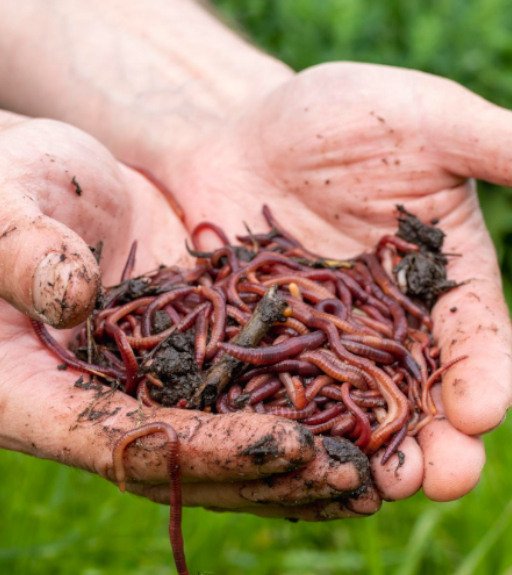
Vermicast = worm castings. Same material: organic matter that has passed through a worm’s gut.
Compost is broken down by heat-driven microbial activity. Vermicast is processed at ambient temperature by worms plus microbes, with no hot phase.
Result: finer, more uniform particles, higher biological activity and humic substances.
Practical difference: compost adds bulk; vermicast is a concentrated conditioner used at a fraction of the rate.
What is the NPK for Earthworm vermicast? Is it a fertiliser?
Published Laboratory Results: Nitrogen 0.5–1.5% · Phosphorous 0.1–0.3% · Potassium 0.15–0.56%
Yes, vermicast is not a fertiliser per se, rather vermicast is a bio-active soil conditioner. Natural, organic vermicast does not exhibit the super-powered artificial chemical numbers of synthetic soil stimulants.
Where the value is: Vermicast presents nutrients in easily accessible plant-available form, with fecund microbial activity, plentiful humic substances and superior water retention properties.
Vermicast is the ideal soil and root-zone improver. Improve your soil with Vermicast to compliment your chemical inorganic fertiliser regimen.
How Much Vermicast should i use?
Potting mix – Aim for 25% of container volume. Blend with mushroom compost and a local organic potting blend for best results. Use a free-draining additive like coconut fibre for additional impact.
Existing Pot Plants – Add a generous handful – approx 250 g per pot – and rake gently across the surface. Cover with light mulch/gravel and water in thoroughly
Topdressing – Use a spreader to evenly distribute vermicast upon your growing surface. Carefully calculate the quantity and aim for a 2.5–5 cm (1–2 in) layer. Again, water in thoroughly and rake over gently to aid absorption.
Can I Use Too Much Vermicast?
More does not mean better. Like most applications, overuse does not result in exponential results. Vermicast is a moderate soil conditioner and in our laboratory trials, the best growth results were when the vermicast was at 10–20% of total media volume. Higher proportions, though not toxic or harmful, gave no statistically significant extra benefit. The cost of overdosing is wasted vermicast, not burnt plants.
Year on year, with consistent vermicast use, required rates of vermicast application fall over successive seasons as soil fertility builds. This soil building feature is at the core of the whole vermicast concept.
Worm juice, worm tea, leachate, Vermifluid: are they the same thing?
No. There are 3 distinct products from earthworms consuming organic compost:
Worm Castings: the solid output from the worm’s digestive tract – vermicast. Worms consume organic matter and process it through their gut and expel it at the surface as vermicast.
Worm tea: castings steeped in water. The key variable is the dilution rate – seek a certified rate of approx 20% for optimal performance.
Leachate: liquid drained through the bed. Leachate can carry unprocessed material, is still a highly effective bio-active additive for your soil substrate. Again, the pay attention to the dilution rate for optimal performance.
Vermifluid: At Earthworms Australia, we offer Vermifluid as a direct application for improved soil yields.
Dilution: soil drench 10:1 water to product (OSU); foliar spray around 6% (Prisa & Jamal 2025).